

Address Pass Finder - "Did We Pass That House Tuesday Morning?", Answered in 30 Seconds
Resolving Address-Specific Inquiries in Public Service Operations
Address Pass Finder Resolving Address-Specific Inquiries in Public Service Operations Industry: School district transportation A school district transportation operation regularly received inquiries from parents and residents regarding whether a specific bus had passed a specific address at a specific time, typically related to missed pickups, route concerns, or community complaints. Standard tools support vehicle-centric queries (where did this vehicle go), but address-centric queries (which vehicles passed this location) required manual GPS history review, often taking 15 to 20 minutes per inquiry. Response times were inconsistent and the process did not scale. The Solution We deployed Address Pass Finder, which inverts the standard query model. The dispatcher enters an address and a time window; the add-in returns all fleet vehicles that passed within proximity during that window, with timestamps and pass-by speed. A typical inquiry, "did our bus pass this address this morning between 7:45 and 8:15?", is now resolved in under thirty seconds. In one early instance, the tool confirmed that the bus had in fact driven past a complainant's stop without stopping, indicating a missed pickup rather than a routing error. The dispatcher was able to identify the cause (a driver paperwork discrepancy), respond to the parent within minutes, and address the underlying process issue with the driver the same day. The use case extended beyond missed pickups: speed complaints from residents, delivery disputes, and incident investigations are all handled through the same workflow. Where This Applies Address Pass Finder is most relevant for fleets that: Operate in public-facing roles where address-level inquiries are routine (school transport, municipal services, delivery) Need defensible historical records for liability or community-relations purposes Resolve customer or resident disputes that require location-specific verification Conduct incident investigations where proximity to a known location is material The core value is the inversion from vehicle-centric to location-centric search, the ability to ask "who was here?" rather than "where did this vehicle go?"

Bus Route Progress - See Which Buses Are On Route, Late, or Parked - In One Glance
Define each route's time window, watch them in and out of zones live
Route Progress for School Routes Improving Schedule Visibility for a District Transportation Operation Industry: Public school district transportation A school district transportation operation managing several dozen routes received a high volume of inquiry calls during afternoon dismissal, primarily from parents and school administrators seeking the status of specific buses. Each call required the dispatcher to manually locate the vehicle, cross-reference its expected schedule, and provide a verbal estimate. The process was reactive, time-consuming, and difficult to scale during peak hours. The Solution We deployed Route Progress for School Routes to provide structured live visibility. Each route was configured with its expected time window, start, in-progress, and depot-return milestones, along with geofenced zones at key checkpoints. The dashboard displays current status for every route at a glance: in-progress, ahead of schedule, behind schedule, or completed. During the first afternoon dismissal cycle, the dispatcher was able to identify a route running behind schedule due to a localized traffic delay and proactively notify the affected school office before parent calls arrived. This pattern continued: school offices received status updates in advance of inquiries, and were able to relay accurate information to parents directly. Within two months, inbound parent calls during dismissal hours decreased substantially. End-of-month route compliance reporting, exported from the dashboard to Excel, was provided to district leadership, establishing a baseline for ongoing performance review. Where This Applies Route Progress for School Routes is most relevant for fleets that: Operate schedule-bound routes (school transport, scheduled delivery, sanitation) Report compliance metrics to a board, district, or government body Field regular inquiries about driver or vehicle status from external stakeholders Need historical route-adherence data for performance review For tracking school bus route compliance. Define time-based routes with zone assignments, monitor live vehicle positions (in/out of zone), and generate historical reports with Excel export. Built for fleet managers to ensure vehicles meet scheduled route windows. The core value is replacing reactive, per-call status lookup with proactive schedule visibility and exportable compliance reporting.
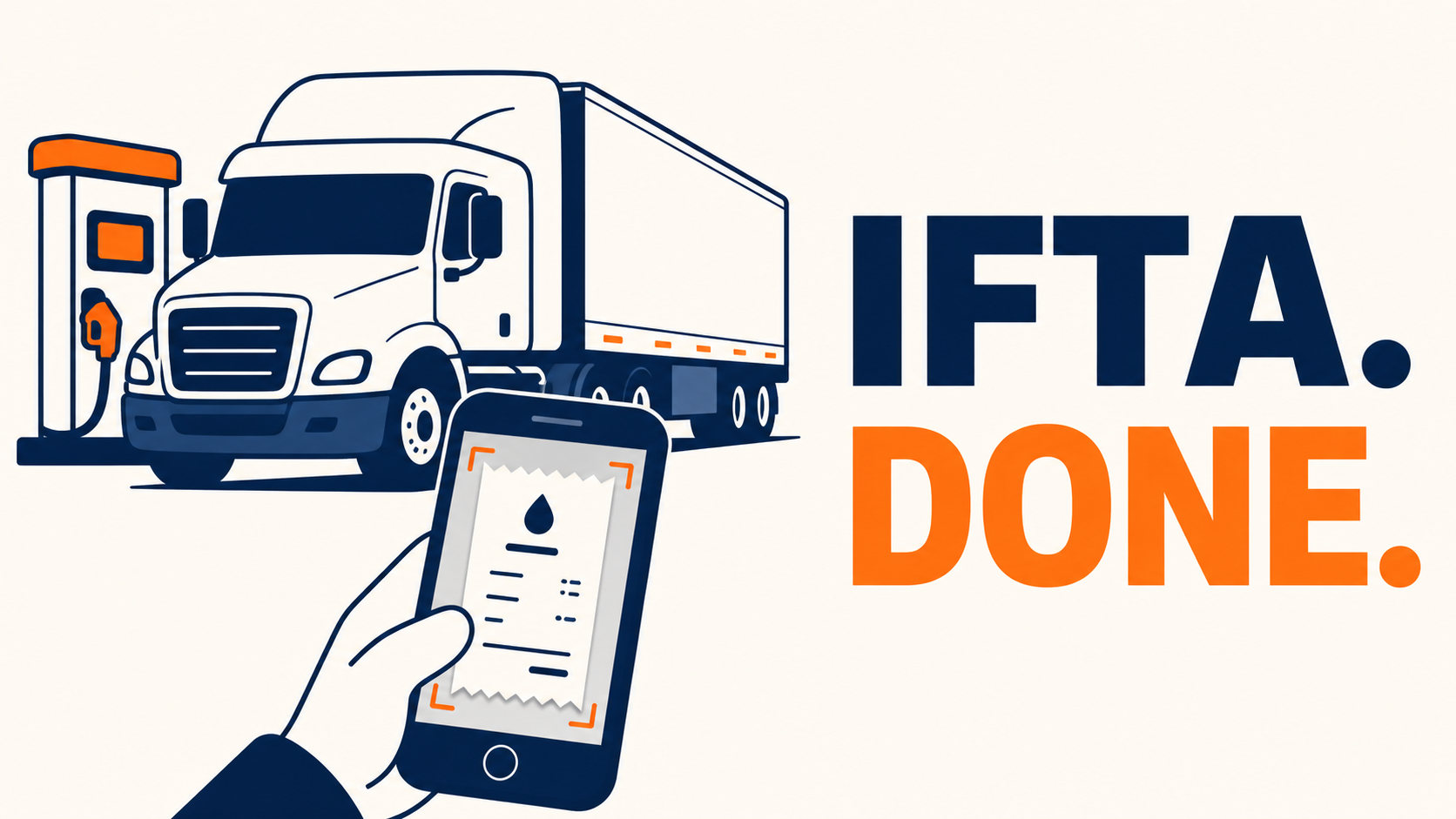
Fuel Receipt Capture- Make Fuel Receipts Painless, and Catch Cost-per-KM While You're At It
Photo the receipt, the rest auto-fills, and you export quarter-ready IFTA data in one click
Fuel Receipt Capture Recovering From a Multi-Year Fuel Audit Industry: Regional trucking, cross-border operations A mid-sized trucking client received a routine IFTA audit notice that included a request for a specific fuel receipt from over two years prior. Despite organized quarterly filings, the original physical receipt could not be located, it had either faded from thermal-paper degradation or been damaged in long-term storage. The audit closed with a "documentation deficient" notation. Within weeks, the client's insurance broker flagged the audit history as a risk factor, leading to an upward adjustment in their premium at renewal. The Solution We deployed Fuel Receipt Capture across the fleet. The workflow is fully automated at the point of purchase: at the pump, drivers open our add-on and photograph the receipt. The system reads the receipt automatically and populates every field, fuel volume, total cost, station, transaction time, without manual entry. Vehicle ID, GPS location, and odometer reading are pulled from the the tracking device. The complete record, including the receipt image and all extracted data, is stored and remains searchable indefinitely by date, vehicle, driver, location, or amount. Six months after deployment, the same client received a spot-check from a different auditor. The requested receipt was retrieved, downloaded, and emailed in under 15 minutes. A secondary benefit became apparent during the first quarter of use: cost-per-kilometre is calculated automatically from the captured data, surfacing fuel-spend outliers at the vehicle level. This identified a pattern of unnecessarily frequent fuel stops on one unit, which was addressed through driver coaching. Where This Applies Fuel Receipt Capture is most relevant for fleets that: File IFTA across multiple jurisdictions Are subject to DOT, tax, or insurance audits requiring multi-year recordkeeping Manage fuel without a comprehensive fuel-card data feed Need defensible documentation that survives long retention periods The core value is converting a perishable physical record into a permanent, fully digitized one at the moment of purchase, with no manual data entry, eliminating both the storage risk of paper and the input error risk of typed entry.
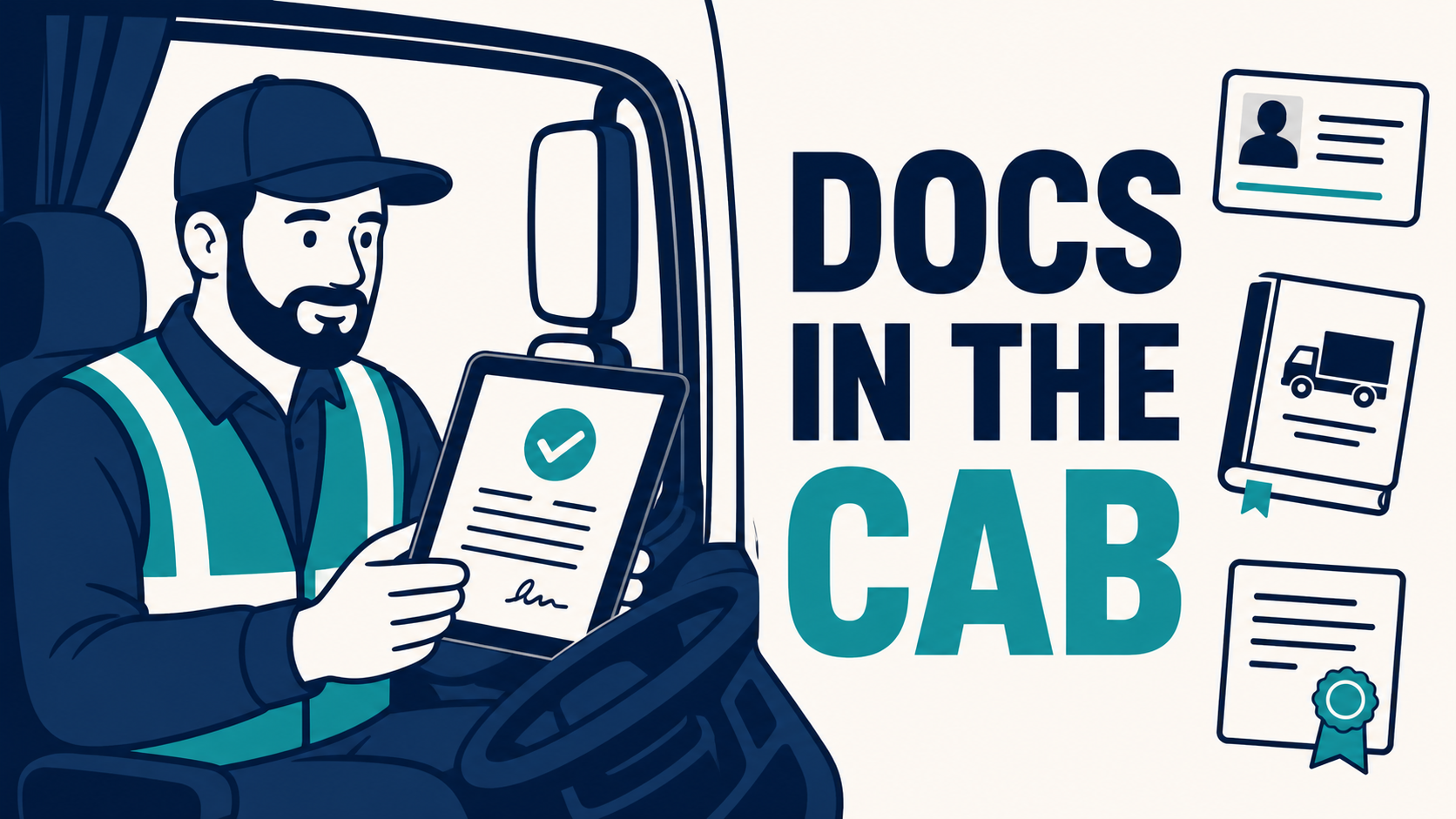
GeoDocs - Every License, Policy, SOP, and Manual. One Tap Away in the Cab
Centralized document management Managers and Drivers, with expiry reminders, and offline access
GeoDocs Centralizing Fleet Documentation for Daily Operations Industry: Utility contractor, mid-sized vehicle fleet A utility services client managed fleet documentation across a mix of paper binders, individual email accounts, and shared folders. The structure created friction in several recurring scenarios. Drivers reassigned to a different vehicle mid-shift had to return to the depot to collect the new vehicle's registration, insurance certificate, and inspection records before resuming work. At customer sites, drivers requesting a signed proof of delivery relied on printed forms that were often missing, damaged, or filed inconsistently after collection. When client documents were updated, insurance certificates, safety policies, equipment manuals, the latest version did not always reach the driver in time, leading to outdated paperwork being presented during inspections and audits. The cumulative cost was operational rather than dramatic: time lost per shift, inconsistent documentation in the field, and recurring exposure during audits and inspections. The Solution We deployed GeoDocs across the fleet's MyGeotab environment. All vehicle documents, registrations, insurance certificates, inspection records, manuals, were uploaded to a single governed repository and assigned by vehicle. All driver-facing documents, SOPs, safety policies, training materials, proof-of-delivery forms, were uploaded and assigned by driver role. Expiry reminders were configured for time-sensitive items. The operational changes followed immediately: Vehicle reassignment. A driver switching to a different vehicle no longer returns to the depot. Opening Geotab Drive on their phone, they have access to that vehicle's complete document set, the registration in the glovebox is no longer the source of truth, the digital record is. At-stop documentation. Drivers retrieve any required document on demand, equipment manuals during a repair, safety procedures before entering a site, regulatory documents during a roadside inspection, without searching through binders or calling dispatch. Documents can be viewed in-app or downloaded to the device for offline access in low-coverage areas. Proof of delivery. At customer sites, drivers present a delivery confirmation form on the phone and capture the customer's signature directly in Geotab Drive. The signed record is timestamped, GPS-tagged, and stored in the fleet's MyGeotab environment automatically. Document version control. When a document is updated centrally, a new insurance certificate, a revised safety policy, every assigned driver receives the current version on their next app open. Read receipts confirm acknowledgement, and outdated copies are removed from circulation. Subsequent audits and inspections have been handled in significantly compressed timeframes, but the more material change has been the elimination of paper-related friction from daily operations. Where This Applies GeoDocs is most relevant for fleets that: Operate in regulated industries (utilities, transportation, hazmat, school transport) Frequently reassign drivers across vehicles within a shift or week Capture customer signatures or proof of delivery as part of standard operations Manage documents that update regularly (certificates, policies, manuals) Are subject to roadside, site, or scheduled compliance inspections The core value is replacing paper and folder-based documentation with a centrally managed, role-assigned digital repository — accessible at the point of work, on the driver's phone, online or offline.

GeoX - Every Accident Documented, Costed, and Ready for the Insurance Adjuster
Capture every detail on the spot, nothing gets lost and your claims package writes itself
GeoX Accident Management Reducing Insurance Risk Through Consistent Incident Documentation Industry: Last-mile delivery, regional fleet A delivery client was experiencing rising insurance premiums without a clear understanding of why. Investigation revealed two contributing factors: minor incidents, bumper contact, parking-lot scrapes, low-speed collisions, were going unreported because no formal capture process existed, and when major claims did arise, the insurer received incomplete documentation. With no historical record to differentiate pre-existing damage from new incidents, the carrier priced for worst-case interpretation. Internal estimates of unreported damage costs varied widely, with no underlying data to settle the question. The Solution We deployed GeoX Accident Management as an add-in across the fleet. Policy was updated to require driver documentation for any incident, regardless of severity. The in-cab workflow guides the driver through a structured checklist, photos, location, time, driver statement, estimated cost, third-party details where applicable, and stores the record in MyGeotab. Within the first quarter, the client had a complete incident dataset for the first time. Reported incident volume initially rose as drivers logged previously undocumented events; it then declined as awareness of the recording process influenced behaviour. When a significant collision did occur, the claims pack was assembled the same day: timestamped photos, GPS coordinates, weather context, driver statement, and structured incident metadata. The carrier closed the claim materially faster than the client's historical average. At the following renewal, the premium decreased for the first time in three years. Where This Applies GeoX Accident Management is most relevant for fleets that: Carry significant deductibles or are partially self-insured Operate in high-touch environments (delivery, courier, school transport, service) Have experienced premium increases without clear cause Need to differentiate historical from new vehicle damage for asset management or resale The core value is converting incident documentation from an inconsistent, after-the-fact process into a structured workflow that runs at the scene, producing claims-ready records and behavioural data over time.
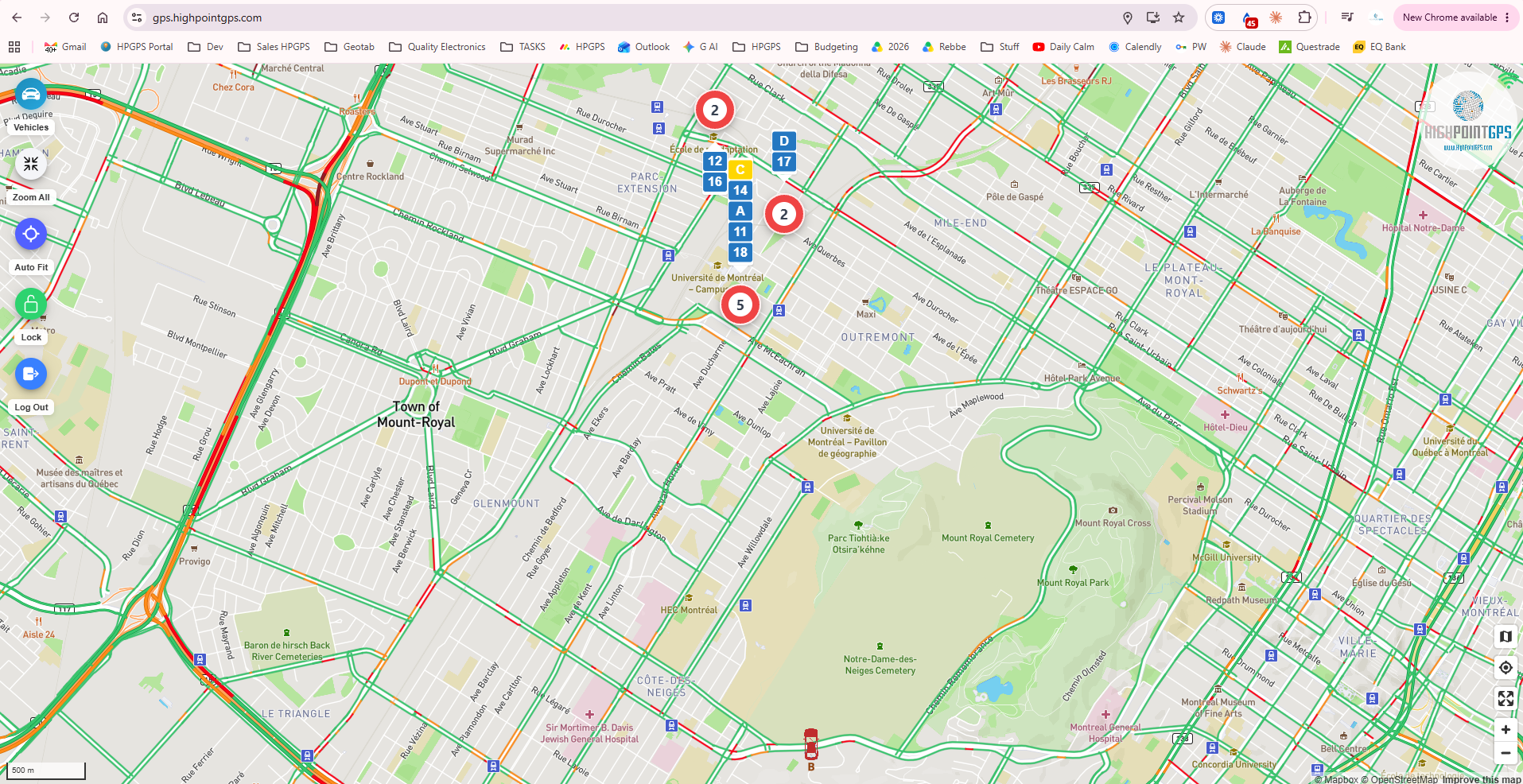
High Point GPS Public Tracking Portal
Public GPS Web application, Share with customers/School Parents or on large screen for live view
A secure web-based GPS tracking portal that provides real-time vehicle visibility for customers, school parents, and the public. Designed for school transportation, shuttle services, events, and fleet operations, the platform displays live vehicle locations, route progress, estimated arrival times, traffic conditions, and operational status on any web browser or large-screen display. No login is required for public viewers, while administrators maintain full control over visibility, privacy settings, and shared routes. Key Features Live GPS vehicle tracking Public shareable tracking links School bus and parent portal support Large-screen dispatch and operations displays Real-time traffic overlay ETA and route progress monitoring Multi-vehicle fleet view Mobile, tablet, and desktop compatible Secure permission-based sharing Shows last 30 minutes of tracking, auto updates Powered by High Point GPS™
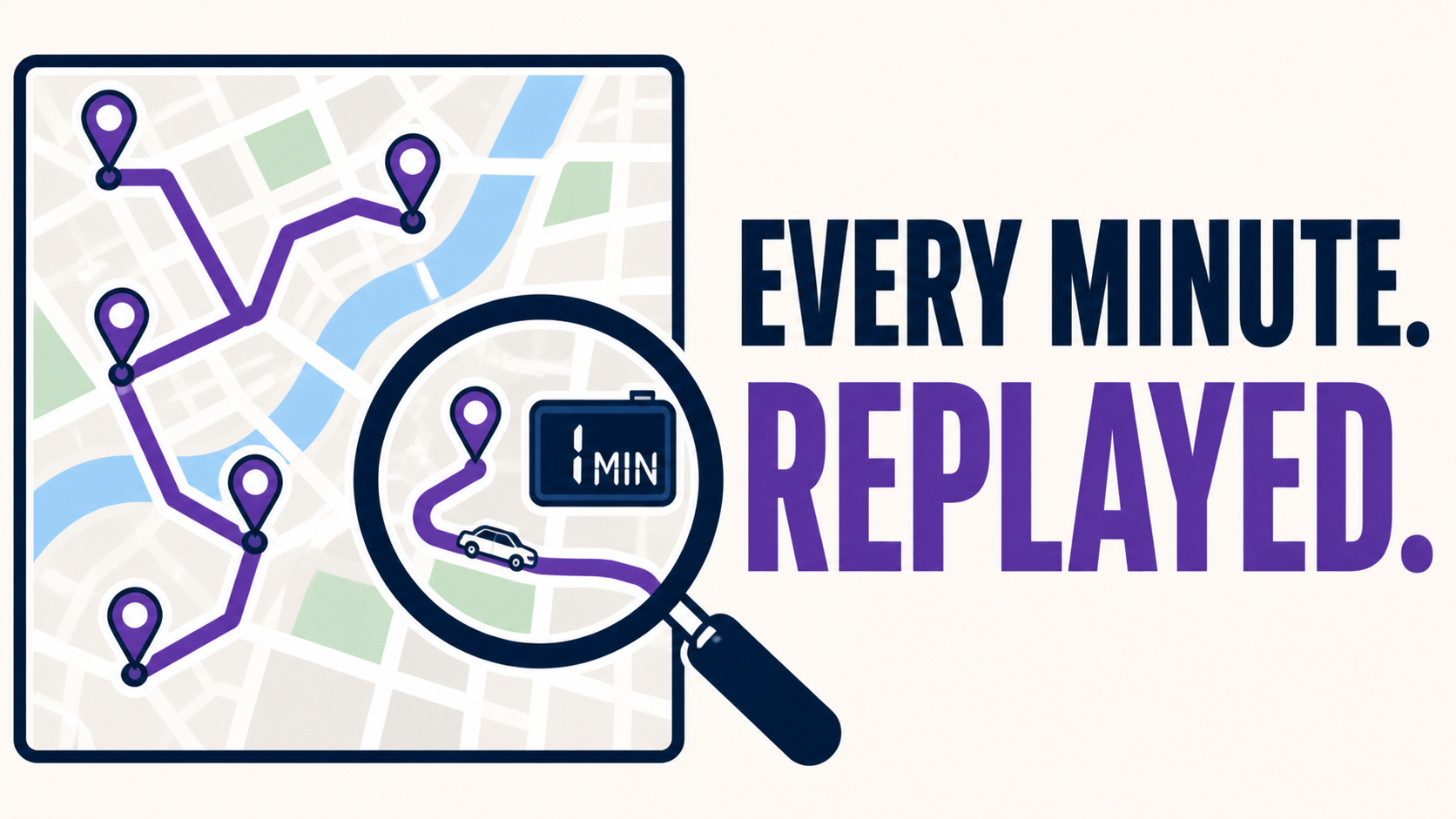
Timeline Map - Replay Any Trip Minute-by-Minute
Show any trip with 60 seconds intervals to see exactly what happened, when, and where
Timeline Map Resolving Customer Disputes With Granular Trip Records Industry: Residential HVAC service, regional fleet A residential service client received a customer complaint alleging that a technician had spent only minutes on-site for a service call billed as a full diagnostic. The standard trip log showed total stop duration of approximately ninety minutes, but the customer disputed the summary. The dispatch team needed documentation detailed enough to either substantiate the customer's claim or definitively close it. The Solution Using Timeline Map, the dispatch lead reconstructed the visit at one-minute intervals. The breakdown showed pre-service time in the cab completing paperwork, walk-up to the property, on-site duration at the residence, a brief return to the truck for parts, and final departure. The complete reconstruction was exported as a PDF and provided to the customer. The customer withdrew the complaint within twenty-four hours. No refund was issued and no public review was posted. The client subsequently incorporated Timeline Map into standard practice for several use cases: customer dispute resolution, post-incident safety review, route variance analysis, and verification of driver-reported delays. In each case, the value lies in being able to examine specific intervals of a trip rather than relying on summary-level data. Where This Applies Timeline Map is most relevant for fleets that: Operate in customer-facing service industries where billing disputes arise Conduct internal investigations of safety incidents requiring exact timing Need to verify driver accounts of delays, route deviations, or extended stops Require defensible records for liability or contractual purposes The core value is the ability to drill from summary trip data into minute-by-minute detail, retrieving information that standard reports do not retain.

Zone Visit Targets - Reward the Drivers Who Beat the Clock at Every Stop
Set a target time per stop and visit gets auto-graded so bonus decisions make themselves
Zone Visit Targets Aligning Driver Bonus Structures With Measurable Performance Industry: Commercial cleaning services, mid-sized vehicle fleet A commercial services client operated a quarterly driver bonus tied to stop-time performance. Target durations varied by client site , smaller offices required shorter visits, regional headquarters longer ones. Performance was assessed informally by the dispatch team based on observed activity. Over time, the same group of drivers consistently received bonuses, while others did not. A subsequent review of telematics data showed the informal assessments did not align with actual on-site duration, and the bonus structure had become a source of internal dispute. The Solution We deployed Zone Visit Targets to formalize the measurement. A target duration window was assigned to each client zone, calibrated to the contracted scope of work, for example, twenty-five minutes for small offices, ninety minutes for regional sites. Each driver visit was automatically scored against the target for that specific zone. The first full quarter of data revealed meaningful variance from prior assumptions. Several drivers previously identified as top performers were running consistently over target on larger sites; other drivers, less visible to dispatch, were meeting target across the full zone mix at a high rate. Bonus allocation was adjusted accordingly, with criteria made transparent to all drivers. In the two quarters following implementation, on-time stop performance across the fleet improved measurably. Driver disputes related to bonus allocation declined to near zero, as performance criteria were now objective and reviewable. Where This Applies Zone Visit Targets is most relevant for fleets that: Operate performance-based driver compensation Bill clients on a per-visit, per-hour, or scope-of-work basis Service client sites with materially different expected stop durations Need an objective measurement layer to support performance reviews The core value is replacing subjective performance assessment with a per-zone, per-visit scoring framework that aligns dispatcher judgment, driver expectation, and compensation criteria.